Smart Home Features Worth Investing In
By the HousingPortal.ca team · Updated June 2026
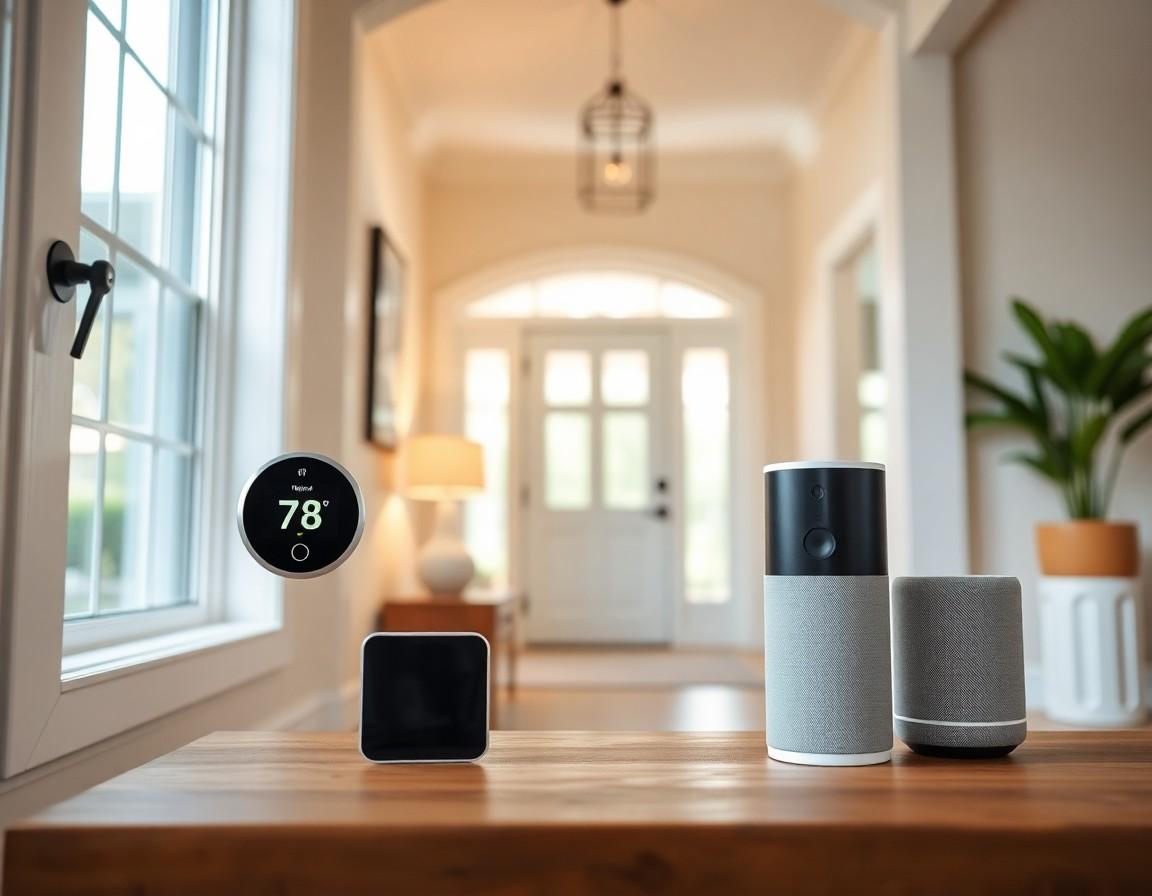
The smart home market is full of devices that solve problems most homeowners do not have, and a smaller set of technologies that genuinely improve daily life, reduce energy bills, or prevent costly damage. The distinction matters, because poorly chosen smart home investments waste money and add complexity rather than comfort. This guide cuts through the noise to identify which smart home features deliver real value for Canadian homeowners — with specific attention to which devices pay for themselves, which add buyer appeal at resale, and which are gimmicks you can safely skip.
Smart Thermostats: The Highest-Return Smart Device
A smart thermostat is the single smart home device most consistently recommended by energy advisors, HVAC technicians, and homeowners alike, because it delivers a measurable financial return. Devices like the Nest Learning Thermostat and Ecobee SmartThermostat learn your schedule, detect occupancy, and adjust temperatures automatically to avoid heating or cooling an empty home. Third-party studies and the manufacturers' own data consistently show 10 to 15% savings on heating and cooling costs, which on a $2,500 annual utility bill saves $250 to $375 per year. At a device cost of $200 to $400, payback occurs in one to two years. Both Nest and Ecobee are compatible with Canadian HVAC systems including single-stage and multi-stage forced-air furnaces, heat pumps (including two-stage and variable-speed models), and hydronic systems — verify compatibility for your specific equipment model before purchasing. The Ecobee has a slight advantage in Canadian cold climates due to its auxiliary heat management for heat pump systems.
Smart Locks and Video Doorbells
Smart locks replace the physical key with a keypad code, smartphone app, or both. For homeowners who frequently have tradespeople, cleaners, or family members needing access, they eliminate key copying and the locksmith cost when keys are lost. Temporary access codes can be created and deleted remotely, which is useful for vacation rentals or house-sitters. Installation is straightforward on most Canadian door hardware and does not require a hub or separate controller. Video doorbells add a camera to the front door that sends motion alerts and records footage, viewable remotely. They have become popular for monitoring package deliveries (a significant and growing source of homeowner frustration) and deterring porch theft. The combination of a smart lock and video doorbell — available for $300 to $600 total — provides a meaningful security and convenience improvement over conventional door hardware.
Smart Lighting
Smart lighting covers a spectrum from simple smart bulbs ($15 to $30 each) to fully integrated dimmer switches that work with standard LED bulbs and connect to a home automation system. The core value proposition is energy savings from automated scheduling (lights that turn off when rooms are empty) and ambiance control (dimming and colour temperature adjustment from a phone or voice assistant). For most homeowners, replacing key fixtures — living room, kitchen, bedroom — with smart switches rather than smart bulbs is the better investment: switches work with any bulb, including standard LED, and do not require manual bulb replacement when they wear out. A whole-home smart lighting setup using smart switches runs $500 to $2,000 depending on the number of circuits. This is a comfort and aesthetic improvement more than a financial one, though the energy savings from occupancy-based scheduling add up over time in larger homes.
Leak and Flood Detectors: Underrated and Underused
Water damage is the most common and expensive home insurance claim in Canada, and the technology to prevent most of it costs under $400. Small wireless sensors placed near water heaters, dishwashers, washing machines, under sinks, and beside toilets detect moisture and send a smartphone alert the moment a leak begins. Whole-home water monitoring systems like Phyn or Flo by Moen go further by monitoring flow throughout the plumbing system to detect anomalies — catching a running toilet, a slow leak behind a wall, or an abnormal overnight flow that suggests a pipe has failed. These systems cost $500 to $1,000 installed. Many home insurers offer premium discounts (typically 5 to 15%) for homes equipped with monitored leak detection. The value proposition is asymmetric: a $200 investment in leak sensors can prevent a $50,000 water damage claim from a failed supply line that ran undetected for days while you were away.
Smart Smoke and Carbon Monoxide Detectors
Traditional smoke and CO detectors are passive devices that sound an alarm when you are home. Smart detectors like the Nest Protect or Kidde Smoke + CO send alerts to your phone when the alarm triggers, even when you are away, and speak a voice alert identifying the specific hazard and location. Interconnected smart detectors communicate with each other so that an alarm in the basement triggers alerts throughout the home. For Canadian homeowners with natural gas appliances, a connected CO detector with smartphone notification is a meaningful safety upgrade — CO is colourless and odourless, and alerts that arrive when you are at work or away for the weekend can prompt action before a pet or returning family member is harmed. These devices cost $50 to $150 each and replace required smoke and CO detectors that you would need to replace anyway.
Setup Considerations for Canadian Homes
Most smart home devices require a reliable Wi-Fi signal in the areas where they are installed. Older Canadian homes with thick plaster walls, metal lath, or multiple floors may have Wi-Fi dead zones that need a mesh network extender ($150 to $400) before smart devices perform reliably. Hub-based systems (like SmartThings or Apple HomeKit) allow devices from different manufacturers to communicate with each other but require a central controller and slightly more technical setup. Hub-free devices (like most Nest and Ecobee products) connect directly to Wi-Fi and are simpler to install and maintain, at the cost of less cross-device integration. For most Canadian homeowners, hub-free devices from one or two compatible ecosystems — Google Home or Apple HomeKit — provide the right balance of capability and simplicity. Privacy considerations are real: smart devices with cameras or microphones transmit data to manufacturer servers, and it is worth reviewing the privacy policies of any always-on device before installation.
Smart Home Budget Guide
Category | Typical Cost (CAD) | Key Benefit |
|---|---|---|
| Smart thermostat | $200–$400 | 10–15% heating/cooling savings |
| Smart locks + video doorbell | $300–$600 | Remote access, package monitoring |
| Smart lighting (whole home) | $500–$2,000+ | Energy savings, ambiance control |
| Leak and flood detectors | $100–$400 | Prevent costly water damage |
| Smart smoke/CO detectors | $150–$400 | Interconnected alerts, smart alerts |
| Smart garage door opener | $100–$300 | Monitor and control remotely |
| Total starter package | $1,350–$4,100 | Meaningful security + efficiency gains |
Effect on Home Value and Buyer Appeal
Smart home features do not add measurable dollar-for-dollar value at resale the way a kitchen renovation does, but they affect buyer appeal — particularly for buyers in the 25 to 45 age range who expect these features in a home at their price point. A smart thermostat, video doorbell, and smart lock are now common enough that their absence in a home above a certain price can be mildly surprising to buyers who encounter them during showings. More meaningfully, a whole-home leak detection system disclosed in a listing speaks to how the home was cared for and can strengthen the narrative of a well-maintained property. For investment properties and rental units, smart locks (which eliminate the cost of rekeying between tenants) and programmable thermostats (which allow remote monitoring of vacant units in winter) are practically useful tools rather than lifestyle features.
What to Skip
Smart appliances — refrigerators with touchscreens, Wi-Fi-connected ovens, smart washing machines — add cost without proportional value for most homeowners. The “smart” features on these appliances are typically underused, and when the connected features are discontinued by the manufacturer (which happens regularly), you are left with an expensive conventional appliance. Smart window blinds are another frequently cited purchase that homeowners regret: they are expensive ($200 to $500 per window), require batteries or wiring, and the convenience of voice-controlled blinds rarely justifies the price for most households. Start with the high-value devices — thermostat, security, leak detection — and only add lifestyle devices if you have clear use cases for them.
Start Here
If you are equipping a home with smart technology for the first time, buy a smart thermostat first. Install it, verify it saves what the manufacturer claims, and use that success as the foundation for deciding what comes next. Add leak sensors under every appliance connected to water. Then consider a video doorbell and smart lock if security and access management are a priority for your household. That three-step sequence covers the highest-return smart home investments available to a Canadian homeowner in under $800.
Related guides & tools
The information presented on HousingPortal.ca is intended for general illustrative purposes only. While the information is believed to be reliable, it cannot be guaranteed for accuracy, completeness, or currency. Neither HousingPortal.ca and its employees, nor any other party identified in this guide/report, assumes any liability for the information provided. The views and opinions expressed by the analysts at HousingPortal.ca are their own and should not be considered as investment advice. It is recommended that you seek the advice of a licensed real estate professional before making any decisions regarding real estate investments.