Home Renovation Planning: How to Do It Right
By the HousingPortal.ca team · Updated June 2026
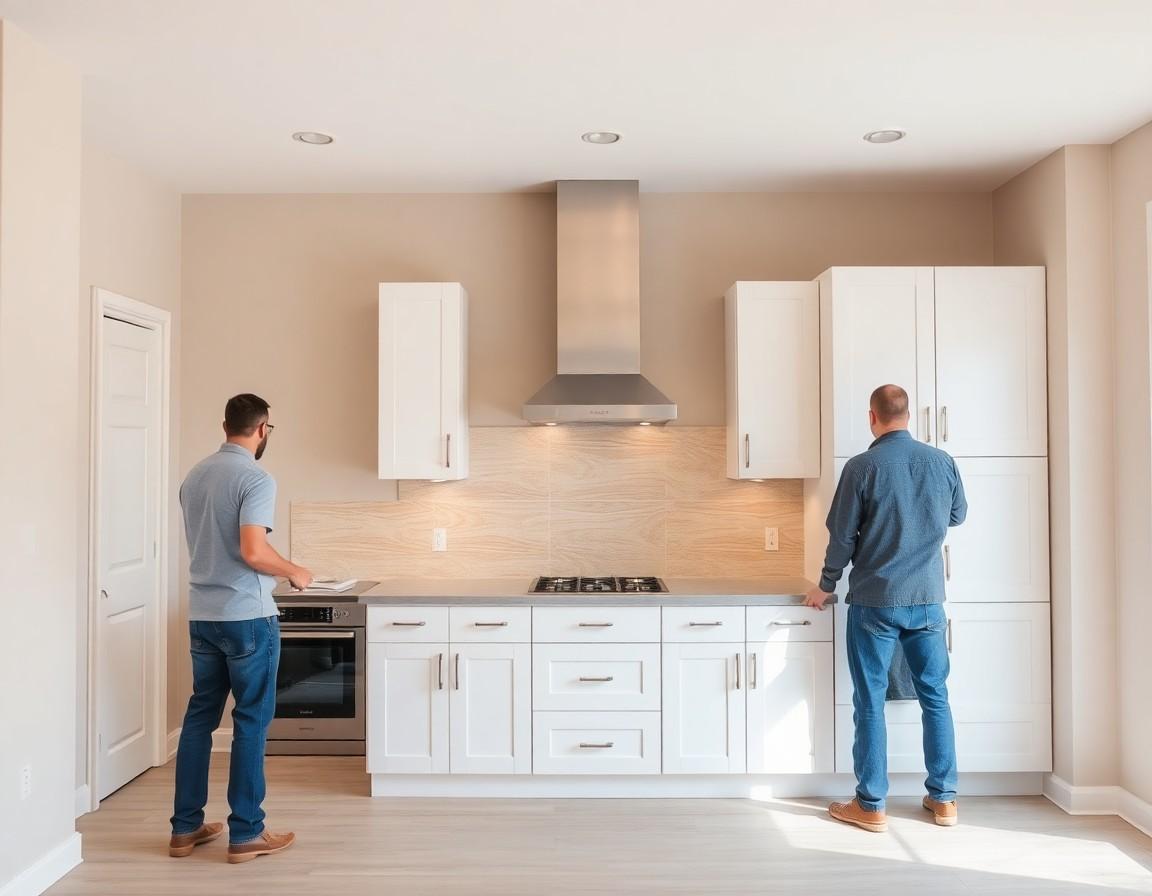
Home renovations are among the most financially significant decisions a homeowner makes — and among the most frequently mismanaged. Projects that begin without a clear scope, a realistic budget, or a reliable contractor routinely end up costing two or three times the original estimate, taking twice as long, and delivering results that disappoint. The difference between a renovation that goes well and one that becomes a prolonged ordeal is almost always planning, not talent or luck. This guide walks through every phase of renovation planning so that you go in with open eyes and come out with a project you are proud of.
Before You Renovate: Define Your Goals
Every renovation decision becomes clearer when you answer one question first: is this renovation primarily for your own enjoyment, for resale value, or both? A homeowner who plans to live in their home for 20 years should optimize for personal satisfaction — the custom kitchen layout that suits how you cook, the ensuite bathroom that makes daily life better. A homeowner preparing to sell in two years should optimize for broad buyer appeal and cost-per-dollar-added-to-value. And a homeowner somewhere in the middle should consciously split the budget between the two goals rather than unconsciously mixing them and satisfying neither. Renovations planned without this clarity tend to overshoot on personal preferences while underdelivering on resale appeal — or vice versa.
Budgeting: The 10–20% Contingency Rule
Every renovation budget needs a contingency — a reserve set aside specifically for problems discovered during the work. Industry standard is 10% for newer homes in good condition and 20% for older homes or any project involving structural work, plumbing relocation, or electrical upgrades. The contingency is not optional: opening walls in a Canadian home built before 1980 routinely reveals knob-and-tube wiring, asbestos insulation, or plumbing in worse condition than visible surfaces suggest. Contractors cannot quote for what they cannot see. If your total budget is $50,000, your real spending authority on finishes and specifications is $40,000 to $45,000. Homeowners who spend the full budget on the visible project and keep nothing in reserve end up with unfinished work or loans taken under pressure when problems emerge.
Renovation Costs by Project Type
Renovation Type | Typical Cost Range (CAD) | Estimated ROI at Resale |
|---|---|---|
| Kitchen (full) | $30,000–$80,000+ | 60–80% |
| Bathroom (full) | $15,000–$40,000 | 55–75% |
| Basement finishing | $30,000–$60,000 | 50–70% |
| Addition (per sq ft) | $250–$450/sq ft | 40–60% |
| Roof replacement | $8,000–$20,000 | 60–70% |
| Window replacement (full house) | $10,000–$25,000 | 50–60% |
| Flooring (per sq ft) | $8–$20/sq ft | 70–80% |
These ranges reflect typical Canadian market costs and vary significantly by region. Major cities like Toronto and Vancouver skew toward the top of each range or beyond due to labour costs. Rural markets skew lower. Material choices — custom cabinetry versus stock, stone countertops versus laminate — can move a kitchen renovation from $30,000 to $100,000 with similar square footage. Get quotes before you design, not after.
Permits: When You Need One and Why It Matters
In Canada, permits are required for structural changes, additions, plumbing relocation or new fixtures, electrical panel upgrades and new circuits, HVAC system replacement, and in most municipalities for basement finishing. Cosmetic work — painting, flooring, cabinet replacement that does not move plumbing — generally does not require a permit. The consequences of unpermitted work are serious: at resale, a home inspection or disclosure obligation may reveal unpermitted work, giving buyers leverage to renegotiate or void the deal. Some municipalities require permits to be closed out before a property can be transferred. Home insurance may refuse to cover claims arising from unpermitted work. And if a subsequent owner needs to alter the unpermitted area, they face the cost and delay of retroactive permitting or removal. Permits are inconvenient but they are not optional for covered work.
Choosing a Contractor
Get a minimum of three written quotes from contractors who have seen the project in person. A quote based on a phone description or photos is not reliable enough to contract against. Verify that each contractor holds a valid business licence in your province, carries general liability insurance of at least $2,000,000, and has current WSIB (or provincial equivalent) coverage for their workers. Ask for three to five references from projects completed in the past two years, and follow up on those references with specific questions: Was the project completed on budget? On schedule? How were problems handled? Would you hire them again? The contractor with the lowest quote is not automatically the best choice — price discipline at quoting is one signal of professional project management, but references and licence verification carry more weight.
The Written Contract: What It Must Include
Never start a renovation without a detailed written contract. The contract should specify the complete scope of work in plain language, the materials and finishes to be used (by brand, model, and colour where applicable), the total contract price broken down by phase, the payment schedule tied to project milestones rather than calendar dates, the start date and estimated completion date, a change order process requiring written approval before any scope changes proceed, and the contractor's warranty on workmanship. A standard arrangement is 10% on signing, 25% at framing or rough-in completion, 25% at drywall completion, 30% at substantial completion, and 10% holdback released at final walkthrough and deficiency correction. Never pay more than 10 to 15% upfront, regardless of what a contractor requests.
Project Sequencing: Rough Work Before Finishes
The sequence of a renovation matters as much as the specification. Structural work comes first: any load-bearing wall removal, foundation repair, or addition framing must be complete before anything else proceeds. Rough-in trades follow: plumbing, electrical, and HVAC are roughed in before walls are closed. Insulation goes in after rough-in inspections. Drywall follows insulation. Flooring is typically installed after all other trades have finished but before trim and cabinetry in most cases. Painting follows trim. Fixtures and appliances are the last things installed. Violating this sequence creates rework: painting a kitchen before the range hood vent is installed means cutting through finished drywall and repainting. Good contractors follow this naturally; it is a useful screen for identifying inexperienced ones.
Change Orders and Scope Creep
Scope creep — the gradual addition of work beyond the original contract — is responsible for a significant share of renovation cost overruns. It happens in two ways: the homeowner adds requests during the project (“while you're in there, can you also...”), or the contractor discovers conditions that require additional work (rot behind the tile, inadequate structural support). Both situations require a written change order before any additional work proceeds, specifying the scope, cost, and schedule impact. Insist on this for every change, regardless of how minor it seems. Small additions accumulate quickly: five separate “while you're in there” items at $500 to $2,000 each add up to $5,000 to $10,000 in unbudgeted costs. The change order process exists to protect both parties, not to create paperwork.
Financing a Renovation
The most common renovation financing options in Canada are a HELOC (home equity line of credit), refinancing the existing mortgage, a renovation mortgage (which wraps the renovation cost into a new mortgage based on the post-renovation appraised value), or a personal loan. A HELOC is the most flexible option for homeowners with available equity — you draw only what you need, when you need it, and interest is charged only on the outstanding balance. Rates are typically prime plus 0.5% to 1.0%, which compares favourably to renovation loans from hardware chains or unsecured personal loans. Refinancing makes sense when existing mortgage rates are already high and a lower blended rate plus renovation funds produces a better overall financing cost. A purchase-plus-improvements mortgage is a useful tool when buying a fixer-upper: it adds the estimated renovation cost to the purchase mortgage, based on an appraiser's estimate of post-renovation value, and holds the renovation funds in trust disbursed as the work is completed.
What Adds Value vs. What Doesn't
Kitchen and bathroom renovations consistently deliver the highest resale returns in Canada, particularly when they bring outdated spaces into line with current buyer expectations. A dated kitchen with original 1990s cabinets and laminate countertops in a market where buyers expect quartz and soft-close drawers is a negotiating liability. A modest kitchen refresh — new cabinet faces, countertops, and lighting for $20,000 to $30,000 — often produces $30,000 to $45,000 in added value. Swimming pools are the most reliably cited renovation that does not add proportional value: in Canadian climates with short pool seasons, many buyers view them as a liability rather than an asset, and the installation cost of $60,000 to $100,000 rarely adds equivalent value outside of luxury markets. Converting to an in-law suite or adding a legal basement apartment adds meaningful value in markets where rental income is a buying consideration.
Questions to Ask Before You Break Ground
Before committing to any renovation, work through these questions honestly: What is the all-in budget including contingency, permits, design fees, and temporary accommodation if needed? What is the worst-case scenario if the project runs 30% over budget and two months over schedule, and can you handle it? Have you verified the contractor's licence, insurance, and at least three references? Is every material selection confirmed and on order before work begins? Do you have written approval from your municipality for all required permits? Is the scope of work documented in enough detail that any dispute about what was included could be resolved by a third party reading the contract? A renovation that begins with honest answers to these questions is far more likely to finish on time and on budget than one that begins with optimism and an open-ended contractor conversation.
The Bottom Line
The homeowners who get renovations right are not the ones with the largest budgets — they are the ones who did the work before the work. Define your goals, set a realistic budget with contingency, hire verified contractors through a rigorous selection process, and document everything. The renovation itself is easier when the planning is thorough.
Related guides & tools
The information presented on HousingPortal.ca is intended for general illustrative purposes only. While the information is believed to be reliable, it cannot be guaranteed for accuracy, completeness, or currency. Neither HousingPortal.ca and its employees, nor any other party identified in this guide/report, assumes any liability for the information provided. The views and opinions expressed by the analysts at HousingPortal.ca are their own and should not be considered as investment advice. It is recommended that you seek the advice of a licensed real estate professional before making any decisions regarding real estate investments.