New Construction vs Resale Homes: Which Should You Buy?
By the HousingPortal.ca team · Updated September 2026
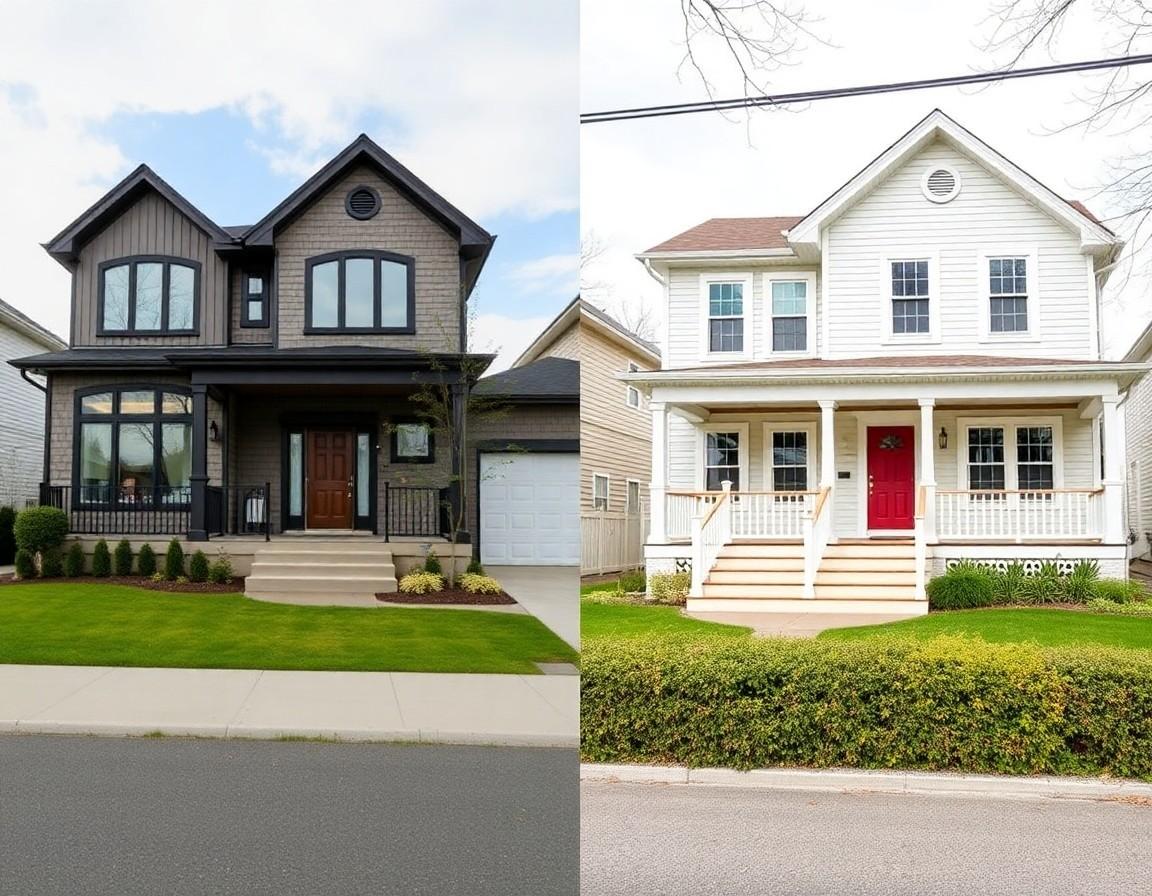
One of the earliest and most consequential decisions a home buyer makes is whether to purchase a newly built home from a builder or an existing property on the resale market. Both paths carry distinct financial structures, risks, timelines, and trade-offs that can dramatically affect your experience and long-term outcome. There is no universally correct answer — the right choice depends on your lifestyle, financial position, timeline, and tolerance for uncertainty. This guide walks through every meaningful dimension of the comparison so you can make the decision with full information.
The Key Differences at a Glance
The table below outlines the most important dimensions side-by-side. Each is explored in detail in the sections that follow.
Dimension | New Construction | Resale Home |
|---|---|---|
| Purchase Price | Often at a premium; builder controls pricing | Negotiable; set by market conditions |
| HST/GST | Applicable (HST in ON); rebates available | Generally exempt (not a new build) |
| Warranty | Tarion/provincial new home warranty | None; home sold as-is unless negotiated |
| Occupancy | Delayed; occupancy fees during interim period | Immediate on closing day |
| Inspection | PDI with builder; no traditional inspection | Full independent inspection recommended |
| Deposit Structure | Typically 5%–20% in stages over build period | Typically 5% at offer, balance on closing |
| Customization | Floor plans, finishes, upgrades available | Limited; buy what exists |
| Neighbourhood Maturity | Developing; schools/transit may be years away | Established; amenities, schools, transit in place |
Pricing Dynamics: Premium vs Negotiation
New construction prices are set by the builder and are generally non-negotiable at the initial offering, particularly in strong markets. Builders price new units to capture a profit margin and fund construction costs, and they typically price in phases — releasing units at escalating prices as the building progresses and demand is validated. The advertised “starting from” price rarely reflects the final price after upgrades, parking, lockers, and development charges are factored in. Buyers frequently discover that the base price unit is the least desirable in the building, and the actual cost of a competitive unit is 10% to 20% above the headline figure.
Resale homes, by contrast, are priced by sellers who are reacting to current market conditions and are motivated to close. The price is negotiable, subject to competing offers. In a balanced market, there is often room to negotiate on price, closing date, or included chattels. In a seller's market, you may still face multiple offers and overbidding — but even then, you are competing against other buyers rather than accepting a builder's fixed schedule.
HST and GST on New Construction
One of the most significant and frequently misunderstood financial differences between new and resale is tax. New homes from builders are subject to HST (in Ontario, Ontario and federal components totalling 13%) or GST (in provinces that have not harmonized). Resale homes are generally not subject to HST, making new construction meaningfully more expensive on a before-rebate basis.
The federal government and most provinces with HST offer new housing rebates that recover a portion of the tax for buyers who will occupy the home as their primary residence. In Ontario, the general federal rebate applies to homes priced below $450,000, returning up to 36% of the federal 5% GST portion. The Ontario rebate returns 75% of the provincial 8% component up to a maximum of $24,000, reached at $400,000. First-time buyers now get far more: the federal first-time home buyers' GST/HST rebate covers the full 5% (up to $50,000) on new homes up to $1 million, phasing out by $1.5 million, and Ontario matches it on the 8% provincial portion (up to $80,000). Ontario has also temporarily extended relief to every buyer who will live in the home, for agreements signed between April 1, 2026 and March 31, 2027: up to the full 13% HST on homes up to $1 million, reduced above $1.5 million. Buyers outside these programs — repeat buyers on other dates, or investors — still face a significant net HST cost.
Many builders advertise prices as “including HST with rebate assigned to builder” — meaning the builder has priced in the expected rebate and will handle the rebate claim on your behalf, provided you meet the occupancy requirements. If you do not intend to live in the home (for example, if you are purchasing as a rental investment), the rebate may not apply and the full HST becomes your obligation, adding tens of thousands of dollars to the purchase cost. Confirm the tax treatment in your Agreement of Purchase and Sale before signing.
Warranty Coverage: Tarion and Provincial Programs
One of the most compelling arguments for new construction is warranty coverage. In Ontario, new homes are covered under Tarion, a consumer protection organization that administers mandatory warranty coverage provided by builders. Tarion warranties cover deposit protection (up to $100,000 for freehold, up to $20,000 for condos), delayed closing compensation, one-year coverage for workmanship and materials defects, two-year coverage for water penetration, heating, and electrical defects, and seven-year coverage for major structural defects.
Other provinces have analogous programs: British Columbia has the BC New Home Warranty Program under the Homeowner Protection Act, Alberta has the New Home Buyer Protection Act administered through warranty providers, and most other provinces have frameworks requiring builders to provide some level of new home warranty. The specifics of coverage, limits, and claims processes vary by province, so understanding the program in your province before purchasing is important.
Resale homes have no equivalent warranty. You buy the home in its current condition, and any defects discovered after closing — unless proven to have been knowingly concealed by the seller — are your responsibility. This is why a thorough pre-purchase home inspection is essential for resale transactions and is one of the most significant protections a buyer can retain.
New Build Risks: Delays, Assignment, and Occupancy Fees
New construction carries a category of risks that resale buyers never encounter. Builder delays are common and can extend closing timelines by months or years. Under Ontario's new home purchase contracts, builders are permitted a certain number of delay extensions under the Tarion framework before triggering compensation obligations. In practice, a condo purchased off-plan with an anticipated closing of 2027 might not close until 2029 or later. During that time, your financing rate lock is typically valid for only 90 to 120 days — meaning you will need to requalify at prevailing rates when the time actually comes to close.
Assignment clauses in new construction agreements allow buyers to sell their Agreement of Purchase and Sale to a third party before closing — effectively “flipping” the unit before taking title. Builders vary widely in whether they permit assignments, the fees they charge for assignment consent, and the conditions they attach. If you buy a pre-construction unit and need to exit the contract before closing, your ability to do so depends entirely on whether assignment is permitted and at what cost. Some builders prohibit assignments entirely, leaving buyers who cannot close with no exit except a default.
Occupancy fees are a cost unique to condominium purchases. When a condo unit is complete and ready for you to move in but the building has not been registered as a condominium corporation yet, the builder may require you to begin “interim occupancy.” During this period, you pay the builder an occupancy fee — effectively rent — that covers mortgage interest on the unpaid balance, estimated condo fees, and property taxes. You are occupying your unit and paying for it, but you do not yet own it and no equity is accumulating against your purchase price. This period can last weeks or up to a year or more for large buildings.
Deposit Structures in New Construction
Pre-construction purchases require buyers to fund substantial deposits before the home is built — often staged across several payment milestones over the construction period. A typical condo pre-construction deposit structure might require 5% at signing, 5% at 90 days, 5% at 180 days, and a further 5% at 365 days, totalling 20% before the unit is even close to complete. These deposits sit in trust (in Ontario, with Tarion protection) for the duration of construction and earn minimal interest.
For resale, the standard deposit structure is simpler: typically 5% of the purchase price paid upon acceptance of the offer, with the balance of the down payment due on closing day. There are no staged payments and no multi-year wait. Your money is not tied up in a building project for two to three years.
Resale Advantages: Established Neighbourhoods and What You See Is What You Get
Resale homes offer a degree of certainty that pre-construction simply cannot match. You can walk through the home, inspect every room, assess the condition of mechanicals, observe the street, visit the neighbourhood at different times of day, and speak to neighbours before committing. The property exists, and the price reflects its actual current condition rather than a promise of future delivery.
Established neighbourhoods typically have mature trees, functioning amenities, nearby schools with known reputations, transit access, grocery stores, and community infrastructure that have been built and refined over decades. New developments in suburban locations often lack these amenities for years after purchase. For families with school-age children, or for buyers who rely heavily on walkability and transit, a resale home in an established neighbourhood is often the stronger choice on a day-to-day quality-of-life basis, even if it lacks the “new home” appeal of fresh finishes and a builder warranty.
Inspection Considerations for Each Type
For resale homes, a professional home inspection by a qualified inspector is one of the most important steps in the purchase process. The inspector will assess the structural components, roof, foundation, plumbing, electrical, insulation, windows, and mechanical systems and provide a written report documenting any deficiencies. This report is your primary tool for understanding what you are buying and what maintenance costs may be approaching.
For new construction, the equivalent process is the Pre-Delivery Inspection (PDI), conducted with a builder representative before you take occupancy. The PDI is your opportunity to document any visible deficiencies, missing items, or incomplete work before you move in. Deficiencies recorded at the PDI become the builder's obligation to remedy under the warranty. Many buyers benefit from bringing an experienced new-home inspector to their PDI, as they are trained to identify issues that the untrained eye misses and can help ensure deficiencies are properly documented and tracked. A PDI is not the same as a traditional home inspection and does not test mechanical systems under load or access areas not visible on walkthrough.
Which Type Suits Which Buyer Profile?
New construction is often the better fit for buyers who have flexibility in their timeline, do not need to sell an existing property simultaneously, want a modern layout and energy-efficient systems, value having nothing to fix immediately upon move-in, and have the financial capacity to fund staged deposits over a multi-year period. It can also suit buyers who want a specific unit type or floor plan that is simply not available in the resale market in their target area.
Resale is typically the better fit for buyers with children in specific school zones, buyers who cannot tolerate timeline uncertainty, buyers purchasing without existing equity in another property (since long deposit periods can be difficult to fund), buyers who want to negotiate and see flexibility from a seller, and buyers who want the comfort of knowing exactly what they are buying before they sign. For first-time buyers navigating a stressful process with limited resources, the transparency and immediacy of resale is often a more manageable experience than the abstraction and delays of pre-construction.
Questions to Ask a Builder Before You Sign
Before signing a new construction Agreement of Purchase and Sale, there are several critical questions buyers should put directly to the builder or their sales representative. The answers will reveal more about the transaction than the marketing materials ever will.
Ask about the builder's Tarion or provincial warranty registration and their track record of on-time closings. Ask to see the delay history for their most recent completed projects and how many delay extensions were used. A builder who regularly uses the maximum permitted delays is telling you something important about their operational reliability.
Ask specifically how development levies and charges are structured in the agreement. Many new construction contracts in Ontario include a cap on development charge increases, but not all — and development charges, which are municipal fees for infrastructure, can rise by tens of thousands of dollars between when you sign and when you close. Understand who bears the risk of those increases.
Ask whether assignment is permitted and what the fees and conditions are. Ask about the interim occupancy process — the anticipated occupancy date, the typical duration before registration, and how the occupancy fee will be calculated. Ask whether upgrades are included in the price or priced separately, and whether upgrades can be financed through the mortgage at closing or must be paid at a studio appointment before closing.
Finally, ask your own real estate lawyer — not the builder's lawyer — to review the Agreement of Purchase and Sale before you sign. Builder agreements are lengthy, drafted in the builder's favour, and contain clauses that significantly affect your rights. In Ontario you have a 10-day cooling-off period after signing a new condo agreement; use it to have the agreement reviewed by independent legal counsel.
The Bottom Line
New construction and resale homes are not competing products so much as different experiences with different risk and reward profiles. New builds offer modern features, warranty protection, and the appeal of a home no one else has lived in — but at the cost of timeline uncertainty, HST exposure, complex deposit structures, and a degree of trust that the builder will deliver what they promised. Resale homes offer certainty, negotiation, and established context — but require buyers to manage inspection risk and take on the maintenance history of an older property. Neither is universally superior. The right answer is the one that fits your life, your timeline, and the honest assessment of your financial capacity for the specific risks each path carries.
Related guides & tools
The information presented on HousingPortal.ca is intended for general illustrative purposes only. While the information is believed to be reliable, it cannot be guaranteed for accuracy, completeness, or currency. Neither HousingPortal.ca and its employees, nor any other party identified in this guide/report, assumes any liability for the information provided. The views and opinions expressed by the analysts at HousingPortal.ca are their own and should not be considered as investment advice. It is recommended that you seek the advice of a licensed real estate professional before making any decisions regarding real estate investments.