Rent Increase Limits by Province (2026 and 2027)
By the HousingPortal.ca team · Updated October 2026 · Every limit checked against its official source on October 6, 2026
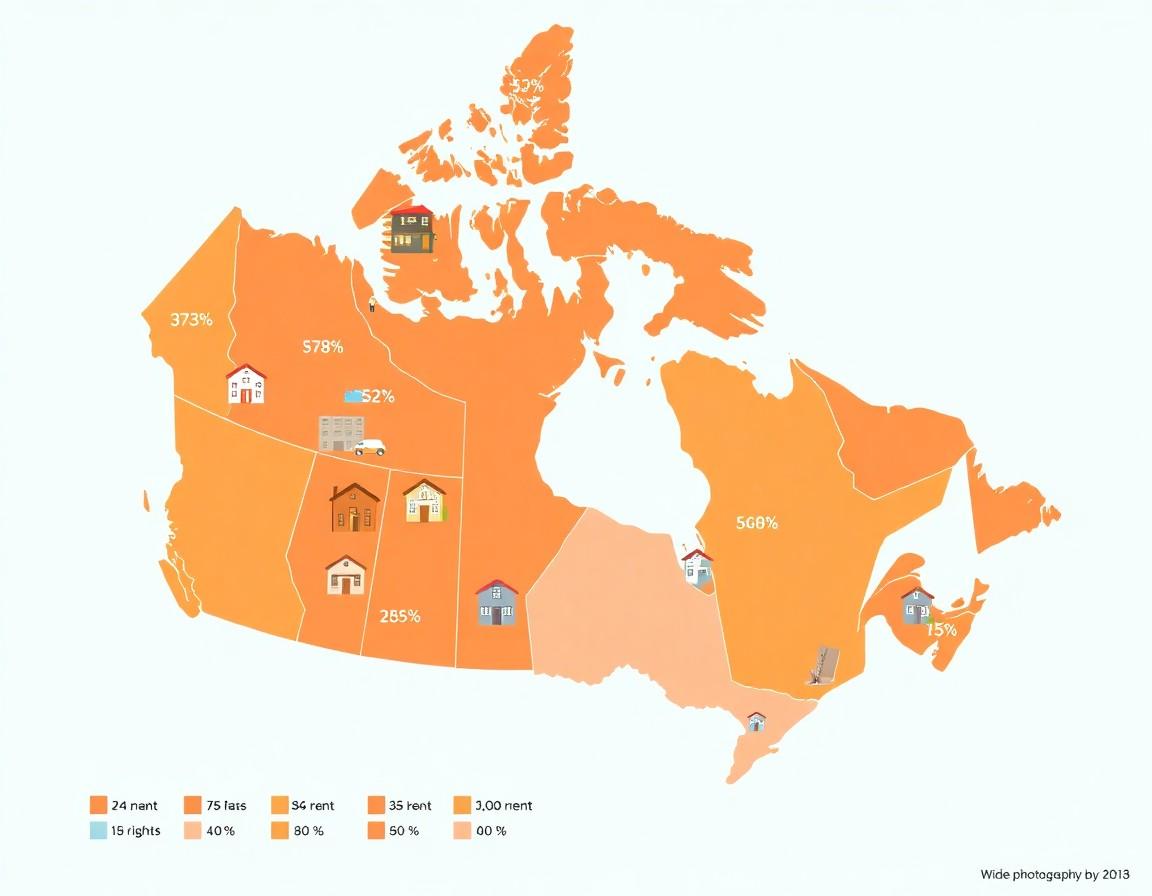
How much a landlord can raise the rent depends entirely on the province. For increases that take effect in 2027, the limit is 1.9% in Ontario, 2.2% in British Columbia, 3% in Manitoba and New Brunswick, 2.1% in Prince Edward Island and 5% in Nova Scotia. Alberta, Saskatchewan, Newfoundland and Labrador, the Northwest Territories and Nunavut have no limit on the amount, only on how often and with how much notice. Quebec has no fixed limit either, but a tenant can refuse an increase and have the housing tribunal set the rent, and Yukon's cap is due to end in May 2027.
Every limit has exceptions: Ontario's does not cover units first occupied after November 15, 2018, and Manitoba's does not cover rents of $2,000 or more in 2027. This page sets out each province's and territory's limit for 2026 and 2027, the notice a landlord must give, who is not covered and how to go above the limit, with a link to the official source for each. To work out your own new rent, use the rent increase calculator.
Rent Increase Limits for 2026 and 2027 at a Glance
The year is the year the increase takes effect. With three months' notice or more, most increases given notice from October 2026 on take effect in 2027.
Province or Territory | 2026 Limit | 2027 Limit | Notice | Not Covered |
|---|---|---|---|---|
| Ontario | 2.1% guideline | 1.9% guideline | 90 days, on Form N1 | Units first occupied after Nov 15, 2018 |
| British Columbia | 2.3% cap | 2.2% cap | 3 full months, on Form RTB-7 | Non-profit rent-geared-to-income housing, co-ops |
| Alberta | No cap | No cap | 3 full months (monthly rent) | Not applicable |
| Saskatchewan | No cap | No cap | 12 months (6 for association members) | Not applicable |
| Manitoba | 1.8% guideline | 3% guideline | 3 months | Rent of $1,670+ in 2026, $2,000+ in 2027 |
| Quebec | No cap; 3.1% base rate if disputed | No cap; base rate due in January | 3 to 6 months before the lease ends | Buildings 5 years old or less |
| New Brunswick | 3% cap | 3% cap | 6 months (3 for a fixed term) | None |
| Nova Scotia | 5% cap | 5% cap (ends Dec 31, 2027) | 4 months | New tenants; public housing |
| Prince Edward Island | 2% allowable | 2.1% allowable | 3 months | None |
| Newfoundland and Labrador | No cap | No cap | 6 months (monthly rent) | Not applicable |
| Yukon | 2.6% from May 15 (2% before) | 2.6% to May 14, then expected to end | 3 months | Income-based housing |
| Northwest Territories | No cap | No cap | 3 months | Not applicable |
| Nunavut | No cap | No cap | 3 months | Not applicable |
What the 2027 Limit Means in Dollars
The most a monthly rent can go up in 2027 where there is a cap, for three typical rents. On $2,000 a month, Ontario's 1.9% is $38 a month, or $456 over the year; Nova Scotia's 5% is $100 a month. Manitoba's guideline does not cover rents of $2,000 or more in 2027.
Province or Territory | 2027 Limit | On $1,500 Rent | On $2,000 Rent | On $2,500 Rent |
|---|---|---|---|---|
| Ontario | 1.9% guideline | +$29 a month | +$38 a month | +$48 a month |
| British Columbia | 2.2% cap | +$33 a month | +$44 a month | +$55 a month |
| Manitoba | 3% guideline | +$45 a month | Not covered | Not covered |
| New Brunswick | 3% cap | +$45 a month | +$60 a month | +$75 a month |
| Nova Scotia | 5% cap (ends Dec 31, 2027) | +$75 a month | +$100 a month | +$125 a month |
| Prince Edward Island | 2.1% allowable | +$32 a month | +$42 a month | +$53 a month |
| Yukon | 2.6% to May 14, then expected to end | +$39 a month | +$52 a month | +$65 a month |
Ontario's Rent Increase Guideline: 2.1% in 2026, 1.9% in 2027
Ontario's guideline follows the province's consumer price index and can never be above 2.5%. It is 2.1% for increases that take effect in 2026 and 1.9% for 2027. A landlord can raise the rent once every 12 months and must give at least 90 days' written notice, usually on the Landlord and Tenant Board's Form N1.
The guideline does not cover units first occupied for residential purposes after November 15, 2018, community housing or long-term care homes: there the rent can go up by any amount, with the same notice. It protects the sitting tenant only. When a tenant moves out, the landlord can set any rent for the next one.
To go above the guideline, a landlord applies to the Landlord and Tenant Board for an above-guideline increase. For major repairs, renovations or security services it is limited to 3% above the guideline a year, for up to three years; an unusual rise in property taxes has no such limit. Tenants can take part in the hearing. A tenant can also agree in writing to an increase of up to 3% above the guideline in return for a specific improvement.
Official source · Disputes: Landlord and Tenant Board
B.C.'s Rent Increase Limit: 2.3% in 2026, 2.2% in 2027
B.C.'s limit is the average change in the province's consumer price index over the 12 months to July of the year before: 2.3% for 2026 and 2.2% for 2027, announced on August 27, 2026. It applies to most tenancies whatever the age of the building. A landlord can raise the rent once every 12 months, with three full months' notice on Form RTB-7.
A fixed-term lease cannot be used to get around the limit: when it ends, the tenancy carries on at the same rent until a proper increase is given. The limit applies to sitting tenants; the rent for a new tenancy is agreed when it starts.
A landlord who has spent on major repairs or replacements can apply to the Residential Tenancy Branch for an additional increase, limited to 3% a year for up to three years. A tenant can also agree to a larger increase in writing.
Official source · Disputes: Residential Tenancy Branch
Alberta: No Rent Increase Limit
Alberta does not limit how much rent can go up. A landlord can raise it once every 365 days, with three full months' written notice for a monthly tenancy (12 weeks for a weekly one, 90 days for other periods).
Disputes go to the Residential Tenancy Dispute Resolution Service or the courts.
Official source · Disputes: Residential Tenancy Dispute Resolution Service
Saskatchewan: No Limit, but a Year's Notice
Saskatchewan does not limit the amount, but it has the longest notice in Canada. For a month-to-month tenancy, a landlord must give 12 months' written notice and cannot raise the rent in the first 18 months; after that, once every 12 months.
Landlords who belong to the Saskatchewan Landlord Association or the province's non-profit housing network need six months' notice, and the Office of Residential Tenancies' page says they can raise the rent after the first 12 months and then every six months. During a fixed-term lease, rent changes only as the lease allows.
Official source · Disputes: Office of Residential Tenancies
Manitoba's Rent Increase Guideline: 1.8% in 2026, 3% in 2027
Manitoba's guideline follows the province's consumer price index but must stay between 1% and 3%. It is 1.8% for 2026 and 3% for 2027, announced on September 3, 2026: the formula gave 3.1%. A landlord can raise the rent once every 12 months with three months' written notice, and must also tell the Residential Tenancies Branch.
Units renting for $1,670 a month or more are exempt in 2026, and the threshold rises to $2,000 in 2027. Buildings first occupied after March 2005 are exempt for their first 20 years, and so are most government, co-op and non-profit units.
Manitoba also limits rent between tenants: in a building of four or more units, a new tenant cannot be charged more than the average for similar units in the building. A landlord who wants more than the guideline must apply to the Branch within 14 days of giving notice.
Official source · Disputes: Residential Tenancies Branch
Quebec: No Fixed Limit, but Tenants Can Refuse
Quebec sets no maximum. The landlord proposes an increase three to six months before a lease of 12 months or more ends, and the tenant has one month to refuse it in writing. If the tenant refuses, the landlord has one month to ask the Tribunal administratif du logement (TAL) to set the rent; otherwise the lease renews at the same rent. A tenant who does not answer is taken to accept.
Since January 2026 the TAL starts from the average of Quebec's consumer price index over three years: 3.1% for leases renewing from April 2026 to April 2027. It then adds adjustments for higher property taxes and insurance and for major work. The rate for 2027 renewals is published in January 2027.
In a building five years old or less, a tenant cannot ask the TAL to set the rent, and since February 2024 the lease must state the most the rent can rise to during those five years. A new tenant can ask the TAL to set the rent if it is higher than the lowest rent paid in the past 12 months, which the lease must state.
Official source · Disputes: Tribunal administratif du logement
New Brunswick's Rent Increase Cap: 3% in 2026 and 2027
New Brunswick has capped increases at 3% since February 1, 2025. The cap is in the law with no end date, and is reviewed every year: on June 24, 2026 the province kept 3% for 2027, with the next review in May 2027. A landlord cannot raise the rent in the first 12 months of a tenancy, then once every 12 months, with six months' written notice for a month-to-month tenancy or three months for a fixed term.
A landlord who has paid for major renovations can apply to a residential tenancies officer for a larger increase.
Official source · Disputes: Residential Tenancies Tribunal
Nova Scotia's Rent Cap: 5% Until the End of 2027
Nova Scotia's cap is a temporary measure that has been extended several times: since January 1, 2026 it allows up to 5% a year, and it runs until December 31, 2027. A landlord can raise the rent once every 12 months, with four months' written notice for a monthly or yearly lease (eight weeks for a weekly one).
The cap protects the sitting tenant: a landlord can set a new rent for a new tenant. A fixed-term lease can still require the tenant to move out when it ends.
Official source · Disputes: Residential Tenancies Program
PEI's Allowable Rent Increase: 2% in 2026, 2.1% in 2027
PEI's Director of Residential Tenancy sets an allowable increase each year from the province's consumer price index and public submissions, and the law says it cannot be more than 3%. It is 2% for 2026 and 2.1% for 2027. A landlord can raise the rent once every 12 months, with three months' notice on the approved form (three weeks for a weekly tenancy).
PEI's limit stays with the unit, not the tenant: a new tenant's rent is limited the same way as a sitting tenant's, and the lease must show the previous rent. A landlord can apply for more, up to 3% above the allowable increase.
Official source · Disputes: Residential Tenancy Office
Newfoundland and Labrador: No Rent Increase Limit
Newfoundland and Labrador does not limit the amount. A landlord cannot raise the rent in the first 12 months of a tenancy or during a fixed-term lease, and can raise it once every 12 months after that, with six months' written notice for a monthly tenancy (eight weeks for a weekly one).
Official source · Disputes: Residential Tenancies Section
Rent Increase Rules in the Territories
Yukon: a 2.6% Cap Until May 2027
Yukon caps increases at an index based on the Whitehorse consumer price index: 2% until May 14, 2026 and 2.6% from May 15, 2026 to May 14, 2027. The territory has said this is the last year of the cap in its current form and plans to end it. A landlord can raise the rent once every 12 months, never in the first 12 months, with three months' notice on the approved form.
Official source · Disputes: Residential Tenancies Office
Northwest Territories: No Rent Increase Limit
The Northwest Territories does not limit the amount. A landlord must give three months' written notice and can raise the rent once every 12 months, a rule that stays with the unit even when the tenant changes.
Official source · Disputes: Rental Office
Nunavut: No Rent Increase Limit
Nunavut does not limit the amount. A landlord must give three months' written notice and can raise the rent once every 12 months.
Official source · Disputes: Nunavut Rental Office
Can the Rent Go Up Between Tenants?
In most provinces the limit protects the tenant, not the unit. When a tenant moves out in Ontario, British Columbia or Nova Scotia, the landlord can set any rent for the next one, which is why long-term tenants in those provinces often pay well below what a new tenant would. A few places limit the reset. In Prince Edward Island the limit stays with the unit, so a new tenant's rent is held to the same increase. In Manitoba, a new tenant in a building of four or more units cannot be charged more than the average for similar units. In Quebec the lease must state the lowest rent paid in the past 12 months, and a new tenant who pays more can ask the tribunal to set the rent. In the Northwest Territories the 12-month wait between increases stays with the unit when the tenant changes.
What a Valid Rent Increase Notice Looks Like
A rent increase notice must be in writing, state the new rent and the date it starts, and reach the tenant at least the required time before that date: 90 days in Ontario, three full months in B.C., Alberta, Manitoba, PEI and the territories, four months in Nova Scotia, six months in New Brunswick and Newfoundland and Labrador, and up to 12 months in Saskatchewan. Several provinces require their own form, such as Ontario's Form N1 and B.C.'s Form RTB-7. In almost every province and territory, the rent can go up only once every 12 months.
A notice that arrives late, uses the wrong form or comes less than 12 months after the last increase does not take effect as written. In most provinces, the increase simply cannot start until a proper notice has been given and the full notice period has passed.
If You Receive an Increase Notice
Check three things: whether your unit is covered by the limit (in Ontario, when it was first occupied; in Manitoba, what you pay), whether the increase is within the limit for the year it takes effect, and whether the notice came on time and on the right form. In Quebec, answer within one month if you want to refuse: a tenant who does not answer is taken to accept. If an increase is above the limit or the notice is wrong, do not simply start paying the higher rent: contact the tenancy authority named in your province's section above, with the notice and your lease in hand. In Ontario, an increase that has been paid for a year without being challenged becomes legal. Our guide to tenant rights and responsibilities covers the other rules that protect you.
Know It Before the Notice Arrives
The limits change every year, and most are announced between June and September for the next year. Knowing your province's limit, whether your unit is covered and how much notice your landlord owes you lets you check an increase the day it arrives, while you still have time to act.
Related guides & tools
The information presented on HousingPortal.ca is intended for general illustrative purposes only. While the information is believed to be reliable, it cannot be guaranteed for accuracy, completeness, or currency. Neither HousingPortal.ca and its employees, nor any other party identified in this guide/report, assumes any liability for the information provided. The views and opinions expressed by the analysts at HousingPortal.ca are their own and should not be considered as investment advice. It is recommended that you seek the advice of a licensed real estate professional before making any decisions regarding real estate investments.