The BRRRR Strategy in Canada: Buy, Renovate, Rent, Refinance, Repeat
By the HousingPortal.ca team · Updated September 2026
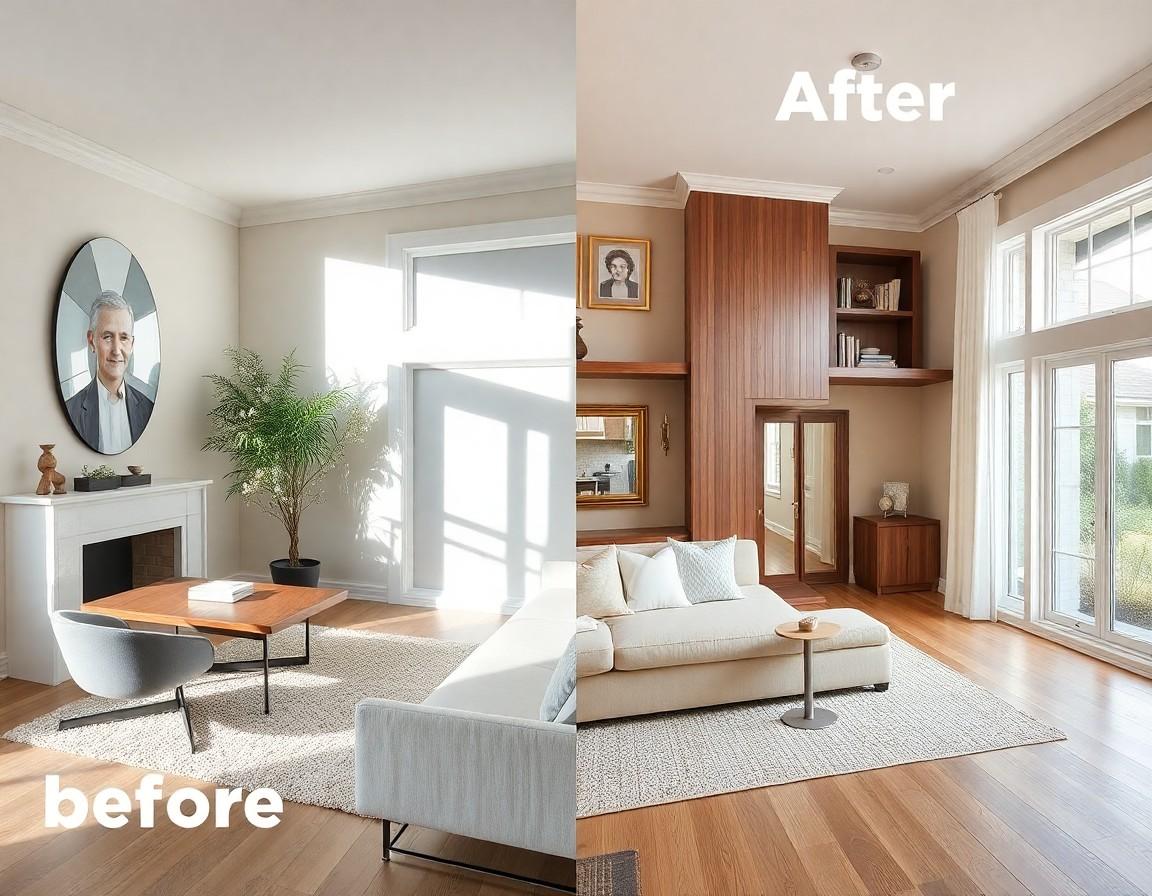
BRRRR — Buy, Renovate, Rent, Refinance, Repeat — is a real estate investment strategy built around a single powerful idea: buy a property for significantly less than its potential value, force appreciation through targeted renovation, then pull most or all of your invested capital back out through refinancing. The extracted capital goes into the next property, theoretically allowing a disciplined investor to grow a portfolio using limited initial capital. The strategy is elegant in concept, genuinely viable in Canada, and frequently misapplied in ways that destroy the returns it promises. This guide walks through the mechanics, the math, the Canadian-specific constraints, and the most common failure points.
The Core Concept
The BRRRR strategy works because real estate values are not fixed — they reflect a property's condition as much as its location. A structurally sound home with a dated kitchen, deferred maintenance, and cosmetic issues can trade at a significant discount to comparable renovated properties on the same street. BRRRR investors find this gap, close it through targeted renovation, and capture the difference as forced appreciation — an increase in value driven by deliberate action rather than market movement. Once the property is renovated and rented, the investor refinances at the new higher value, extracting the capital invested in the renovation and purchase. That capital then seeds the next acquisition, and the cycle repeats.
The Deal Math
Step | Example Figures | Notes |
|---|---|---|
| Purchase price (distressed) | $320,000 | Must be below 70% of ARV to work cleanly |
| Renovation cost | $60,000 | Scope tightly - only what appraisers value |
| Total invested | $380,000 | Your total at-risk capital before refinance |
| After repair value (ARV) | $500,000 | Appraiser's post-renovation estimate - critical number |
| Refinance at 80% of ARV | $400,000 | Canadian investment property max LTV is 80% |
| Capital remaining in deal | $380,000 vs $400,000 = full recovery + $20K | All capital returned plus surplus |
| Return on remaining capital (annualized rent) | Infinite (no capital left in deal) | Rare in practice; partial recovery is still excellent |
The target for a clean BRRRR is to purchase the property at or below 70% of the after repair value (ARV) before renovation costs. At 80% LTV refinancing, the math allows full capital recovery plus a small surplus when the purchase price plus renovation equals roughly 80% of ARV. In Canadian practice, maximum LTV for an investment property refinance is 80% — not 75% as it is in some US lending markets — which actually makes the math slightly more favourable for Canadian investors when compared directly.
Finding BRRRR Candidates
The deal math only works if the acquisition price is sufficiently below ARV. BRRRR candidates are properties where value has been suppressed by condition rather than by location fundamentals: estate sales where heirs want a quick transaction, long-held properties with decades of deferred maintenance, foreclosures and power-of-sale listings, or properties with dated interiors that have scared off retail buyers who cannot see past cosmetics. Wholesale deal lists, relationships with estate lawyers and real estate agents who handle probate sales, and persistence in watching for properties that have sat on the market — often because of condition — are more reliable sourcing channels than simply refreshing MLS daily.
Renovation Management for BRRRR
The renovation in a BRRRR deal is not a personal home improvement project — it is an investment decision measured in return on capital. Every dollar spent on renovation must increase the appraised value by more than it costs. This means resisting the temptation to add personal-taste finishes that do not move appraisals: exotic countertops, premium fixtures, or high-end appliances rarely recover their cost in a rental property appraisal. What appraisers respond to is updated kitchens and bathrooms that align with the neighbourhood's comparable properties, functional mechanical systems, clean cosmetics, and properties that show no deferred maintenance flags. Scope your renovation to meet “neighbourhood standard,” not to exceed it. Overbuilding a BRRRR renovation is one of the most common ways investors destroy their deal math.
The Appraisal Is the Pivot Point
In a BRRRR deal, the appraisal is arguably more important than the purchase price. The post-renovation appraisal determines how much you can refinance, which determines how much capital you recover, which determines whether the strategy worked. Investors who do not understand how appraisers value residential properties — primarily through comparable sales analysis rather than a cost approach — are often surprised when the appraised value comes in below their internal ARV estimate. Comparable sales (comps) in your subject property's neighbourhood, ideally within the past 90 days, drive the appraiser's conclusion. Before purchasing a BRRRR candidate, build a comp analysis yourself: what have renovated properties of similar size and type sold for in the immediate area? That number, not your renovation budget plus purchase price, is what the appraiser will anchor to.
Refinancing Timeline in Canada
Most Canadian lenders require a seasoning period — typically 6 to 12 months from the purchase date — before they will refinance at the new higher appraised value rather than the original purchase price. This seasoning requirement exists because lenders want evidence that the value improvement is real and durable, not simply the result of a cosmetic paint job and an optimistic appraisal. During the seasoning period, your capital remains tied up in the property. This has two implications: first, you need sufficient working capital to survive this period without the refinance proceeds; second, the timing of your refinance affects your annualized return on capital. A 12-month hold to seasoning produces a different return profile than a 6-month hold, even if the ultimate recovery amount is identical.
Risks Specific to BRRRR
The BRRRR strategy concentrates several risk factors that do not apply to a standard buy-and-hold acquisition. Renovation overruns are the most common: distressed properties frequently reveal hidden problems once walls open — knob-and-tube wiring, deteriorated plumbing, foundation issues, or mold that was concealed by cosmetics. A $20,000 budget surprise in a $60,000 renovation changes the deal math substantially. Appraisal risk is the second major specific risk: if the appraiser's after-renovation value is $50,000 below your projected ARV, the refinance proceeds drop proportionally and capital recovery falls short. In a high-rate environment, refinancing is also less powerful because the new mortgage carries higher debt service, reducing the cash flow benefit of capital recovery. Investors who ran BRRRR models at 2021 rates found the strategy significantly less compelling when refinancing at 2023 rates.
Tax Implications of BRRRR in Canada
The Canadian tax rules around BRRRR are nuanced and deserve attention. If you purchase a distressed property, renovate it, and sell it quickly rather than renting it, the CRA may classify the gain as business income rather than a capital gain — fully taxable rather than at the 50% inclusion rate. Since January 1, 2023, the federal residential property flipping rule makes this automatic for a quick sale: profit on a home sold within 12 months of purchase is deemed business income unless a specific life-event exemption applies. The BRRRR strategy's rental phase is specifically what provides the stronger tax treatment: by renting the property after renovation and holding it as a long-term income-producing asset, you establish the property as a rental investment rather than a flip. The refinance itself is not a taxable event in Canada — you are borrowing against equity, not selling — which is one of the strategy's most tax-efficient features. Consult with a real estate tax accountant before executing your first BRRRR deal to ensure the structure supports your intended tax treatment.
Pressure-Testing Your BRRRR Deal
Before committing to a BRRRR acquisition, stress-test the deal against three uncomfortable scenarios. First, what if the renovation costs 25% more than your budget? Does the deal still work with $15,000 or $20,000 in additional renovation spending? Second, what if the appraisal comes in 10% below your ARV estimate? How much capital is now stranded in the property, and can you service the carrying costs while you wait for values to catch up? Third, what if it takes 12 months to season and refinance rather than 6? What is the cost of having that capital tied up for an additional six months, and can you sustain it? If none of these scenarios are deal-breaking, you have a deal with meaningful margin of safety. If any one of them creates serious financial stress, renegotiate the purchase price or walk away.
Start Here
The best starting point for a first BRRRR deal in Canada is not to find the property — it is to build the comp analysis discipline first. Before evaluating any deal as a BRRRR candidate, spend a month pulling sold data on renovated properties in two or three target neighbourhoods to develop a reliable sense of what renovated properties actually sell for versus their unrenovated counterparts. Once you can confidently estimate ARV, you can underwrite any distressed property you encounter against the BRRRR framework with meaningful precision.
Related guides & tools
The information presented on HousingPortal.ca is intended for general illustrative purposes only. While the information is believed to be reliable, it cannot be guaranteed for accuracy, completeness, or currency. Neither HousingPortal.ca and its employees, nor any other party identified in this guide/report, assumes any liability for the information provided. The views and opinions expressed by the analysts at HousingPortal.ca are their own and should not be considered as investment advice. It is recommended that you seek the advice of a licensed real estate professional before making any decisions regarding real estate investments.